2 min read
Building Secure Multi-Tenant SaaS Applications
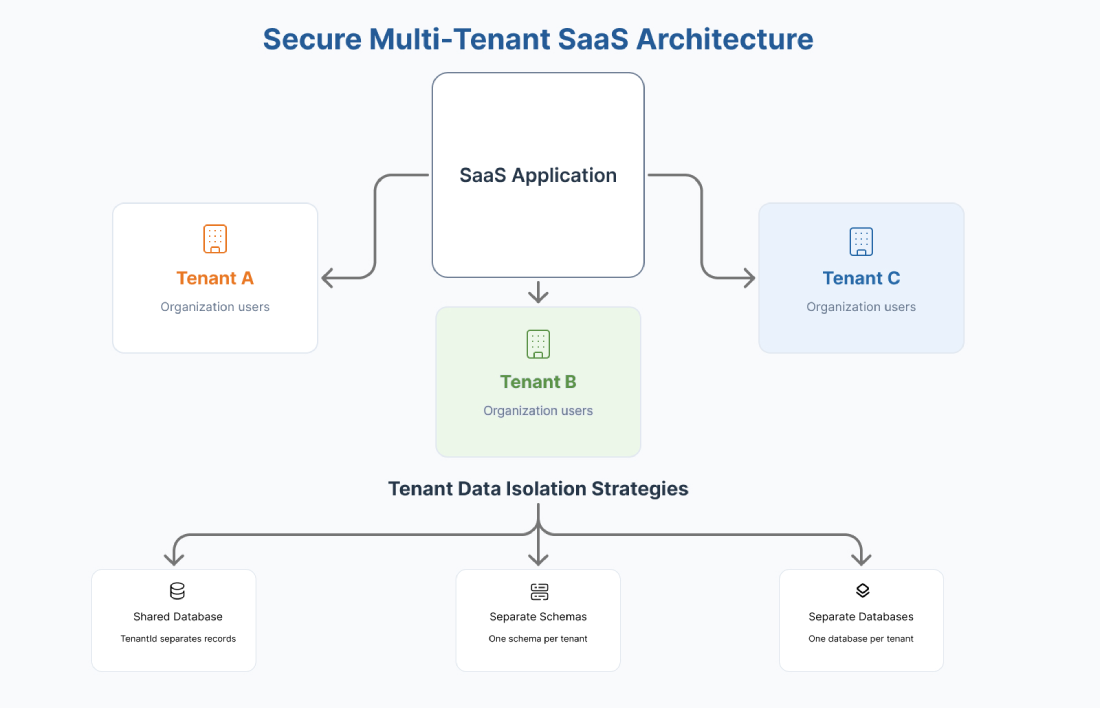
A practical look at tenant isolation, authorization, data boundaries and the mistakes that can expose customer data.
How to protect checkout creation, verify webhook events and prevent the client from controlling subscription state.
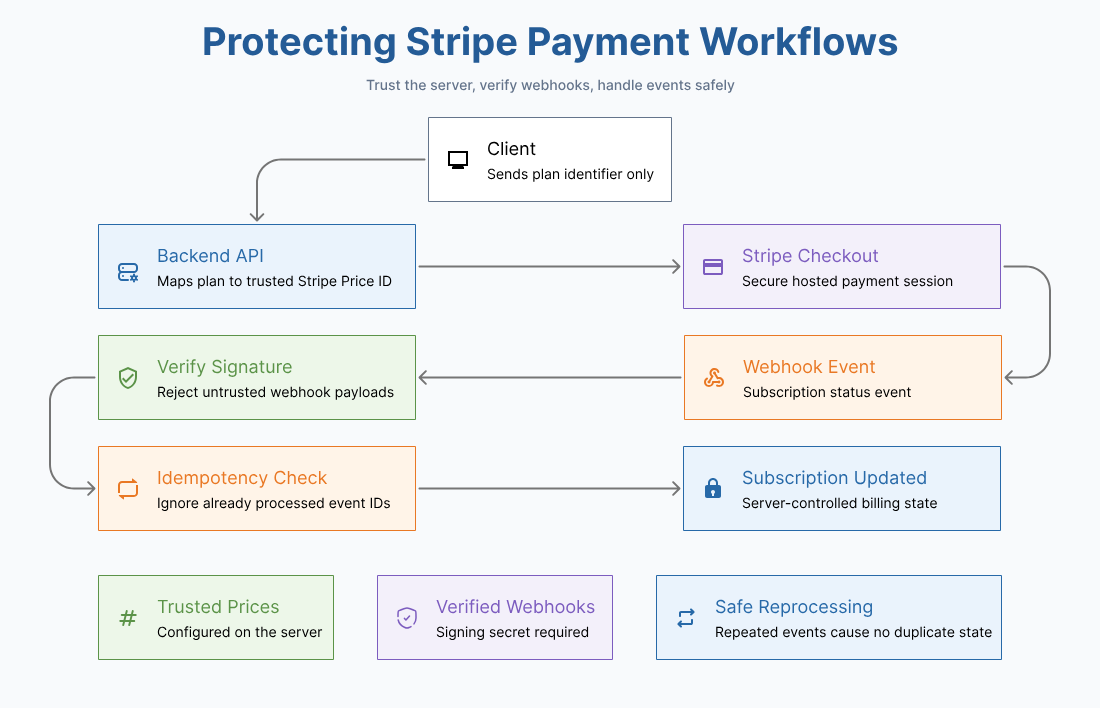
Stripe handles payment processing, but the application still needs to protect checkout endpoints, validate plan selection and treat webhook events as the source of truth for subscription changes.
The client should send a plan identifier, not a trusted price or subscription status.
The backend should map allowed plans to configured Stripe price identifiers.
Webhook payloads must be verified using the configured signing secret before any subscription data is updated.
Unverified events should never modify billing state.
Stripe may deliver the same event more than once.
The application should store processed event identifiers or make subscription updates idempotent.
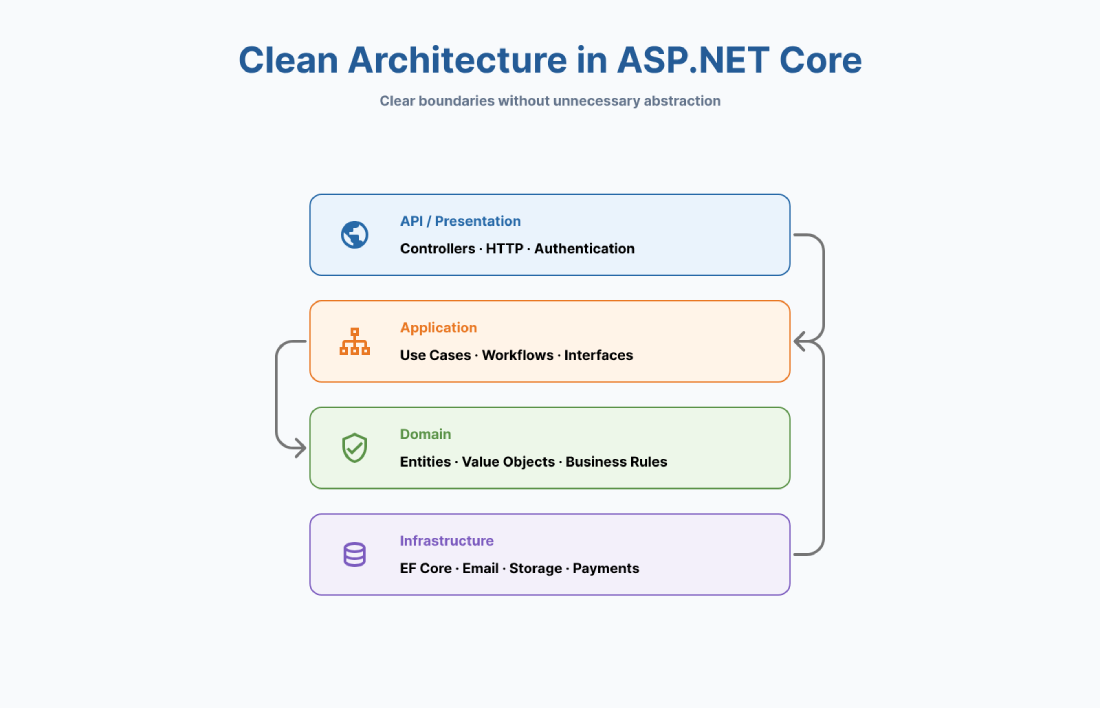
Strong software architecture is not about adding the most layers. It is about protecting the boundaries that matter.
Never trust prices submitted by the browser.
Verify webhook signatures.
Treat webhook delivery as repeatable.
Keep secrets out of frontend code and source control.
Planning a related product? Explore FCODE's SaaS product development.
Tell us what you are building and which technical problems you need to solve.
Continue reading about software architecture and delivery.
A practical look at tenant isolation, authorization, data boundaries and the mistakes that can expose customer data.
How to separate domain logic, application workflows, infrastructure and API concerns without creating unnecessary abstraction.
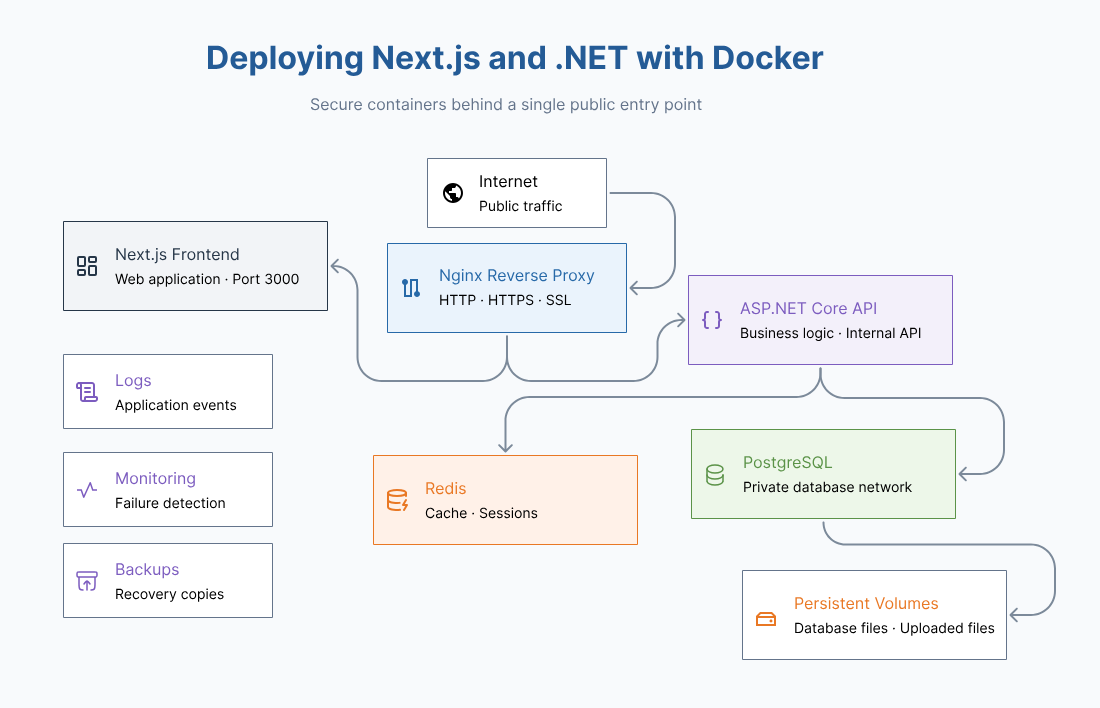
A production-oriented deployment structure using Docker, Nginx, SSL and internal-only application ports.